
Credit Basics
Breaking down credit so you can build a strong financial foundation with confidence.




Credit 101: What Credit Is, Why It Matters,
and How It Really Works
What is credit?
Buying a home --- Getting a car --- Qualifying for credit cards
Even renting an apartment or landing certain jobs.
Credit isn’t new. Versions of it go back nearly 4,000 years, when early civilizations created rules around borrowing and repayment. But modern credit—as we know it today—really took shape in the last century and has become a powerful financial gatekeeper.
The truth!!
Good credit opens doors.
Bad credit quietly closes them—often without explanation.
This guide breaks credit down in plain language so you can understand it, respect it, and take control of it.
Why is credit important?
Good credit doesn’t just help you get approved—it helps you get approved on better terms.
That means:
*Lower interest rates
*Smaller down payments
*More negotiating power
*Less money wasted on fees and interest
Over a lifetime, good credit can save you tens of thousands of dollars.
Bad credit?
It quietly costs you more every time you borrow.
What Goes Into Your Credit Score
Your score is influenced by:
*Payment history (on-time vs late)
*Balances and utilization
*Length of credit history
*Number of accounts
*Negative events (collections, repossessions, bankruptcies)
Even small mistakes—like missed payments or high balances—can have long-lasting effects.
Every payment you make—or miss—tells a story.
Banks, lenders, credit card companies, and service providers report your activity to three major credit bureaus:
*Equifax
*Experian
*TransUnion
From that data, two things are created:
1. Your Credit Report
A detailed history of:
*Accounts
*Balances
*Payment behavior
*Negative events
2. Your Credit Score
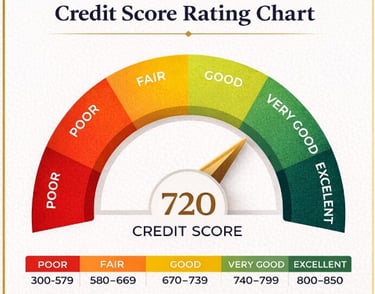
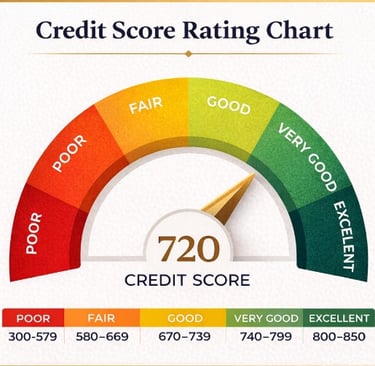
A three-digit number ranging from 300–850 that summarizes your risk as a borrower.
In simple terms:
*Lower score = higher risk
*Higher score = more trust
How Credit Is Tracked (And Judged)
Healthy Credit Habits (The Basics)
*Paying bills on time
*Keeping balances low (under 30% utilization)
*Avoiding too many applications at once
*Keeping older accounts open
*Monitoring your credit regularly
These habits matter—but here’s the part most people don’t realize…
Let’s talk about credit—because whether you realize it or not, credit affects almost every major decision in your life.
At its core, credit is trust.
It’s a lender saying, “We trust you enough to let you use our money now and pay us back later.”
When you use credit, you’re entering a financial agreement—one that gets tracked, scored, and remembered.
And yes—how you handle credit follows you.
The 3 Main Types of Credit
1. Installment Credit
This is credit with a fixed amount and fixed payments.
Examples include:
*Auto loans
*Student loans
*Mortgages
You borrow a set amount and pay it back over time—usually with interest. Lenders look closely at how consistently you make these payments.
2. Revolving Credit
This is most commonly credit cards.
You’re given a limit, you spend within that limit, and you choose how much to pay back each month. Carrying balances too high or missing payments can hurt your score fast—even if you’re paying something.
3. Service Credit
This includes services you use first and pay for later.
Think:
*Cell phone bills
*Utilities
*Gym memberships
Miss payments here, and yes—those accounts can end up on your credit report too.
Why Credit Repair Exists
Even responsible people can end up with:
Errors on their credit reports
Outdated negative accounts
Inaccurate balances
Accounts that should’ve been removed
And disputing those issues alone can be:
Time-consuming
Confusing
Easy to do incorrectly
That’s where professional credit repair comes in.
Start your Credit Journey Today
Enjoy exclusive special deals available only to our VIP Clients.
Sign up on home page